
News & Events / Latest News
ISLAMABAD: After finalising the annual LNG delivery plan for 2026 with Qatar and ENI, the Power Division has informed the Petroleum Division that the power sector will be unable to utilise an additional nine LNG cargoes worth about $270 million. This development has once again placed the Petroleum Division in a difficult position, as it may be left with no option but to divert these surplus cargoes to the domestic gas sector, potentially aggravating the country’s already rising circular debt. Pakistan will import 89 LNG cargoes out of 124 in 2026 -- 88 from Qatar and 1 from ENI. “The electricity demand outlook for 2026 has been revised downward, mainly due to increased solarisation and a lower projected GDP growth rate,” a senior official at the Petroleum Division told The News. “Last week, the Power Division formally conveyed that it would not be able to consume nine more RLNG cargoes in 2026, despite the fact that the annual delivery plan has already been finalised with Qatar and ENI.” Under the agreed plan, 35 LNG cargoes, valued at over $1 billion, will be diverted to international market players. These diversions are expected to generate around Rs160 billion annually, which would help in retiring a portion of the gas circular debt. Of the 35 cargoes, 24 will be diverted by Qatar and 11 by ENI. Pakistan LNG Limited (PLL) has a 15-year agreement with ENI—an Italian LNG trading company—under which ENI supplies one LNG cargo per month at 12.14 per cent of Brent. Meanwhile, Pakistan’s gas circular debt has surged to Rs3,200 billion, largely due to a sharp increase in late payment surcharge, which alone stands at Rs1,450 billion, officials said. Of the remaining Rs1,750 billion, around Rs210 billion has accumulated due to income tax and GST, while the actual stock of circular debt is estimated at Rs1.5 trillion. Previous governments led by PML-N and PTI had signed two long-term LNG supply agreements—one for 15 years at 13.37 per cent of Brent and another for 10 years at 10.2 per cent of Brent—on a take-or-pay basis with sovereign guarantees. Significant investments were also made in privately managed RLNG terminals, RLNG pipelines, and four RLNG-based power plants in Punjab. However, the power sector is now increasingly reluctant to use RLNG for electricity generation, as RLNG-based power does not rank high on the economic merit order. Consequently, electricity produced from RLNG leads to an increase in the overall power tariff basket. The News International (January 12, 2026)
Mar 3, 2026ISLAMABAD: The Pakistan Petroleum Exploration and Production Companies Association (PPEPCA) has warned that it may seek international legal remedies if the government insists on imposing Super Tax at rates exceeding those stipulated in its members’ statutorily protected Petroleum Concession Agreements (PCAs). In a letter to the Secretary of the Special Investment Facilitation Council (SIFC) Jamil Ahmad Qureshi, PPEPCA Secretary General Ibrar Khan said that despite SIFC’s efforts to promote foreign direct investment (FDI) in Pakistan—particularly in the oil and gas sector—upstream exploration and production (E&P) companies are facing serious jeopardy due to the imposition of Super Tax under Sections 4B and 4C of the Income Tax Ordinance, 2001. He said the Super Tax not only undermines the financial viability of member companies but also weakens Pakistan’s decades-long commitment to attracting foreign investment in the oil and gas sector. Sharing details, the PPEPCA secretary general said that E&P companies had challenged the tax before the Islamabad High Court (Writ Petition No. 4027 of 2022). The court held that Super Tax could only be imposed to the extent that it did not exceed the tax cap prescribed in the Petroleum Concession Agreements. The court further ruled that Section 4C “will not apply to petroleum exploration companies to the extent its application results in taxation exceeding the thresholds stipulated in Rule 4 of the Fifth Schedule.” READ MORE: Super tax case: Rs114bn collected in terms of Sec 4B of IT Ord, FCC told The High Court took into account the critical importance of the sector to the national economy and noted that under Section 3B of the Regulation of Mines and Oil-Fields and Mineral Development (Government Control) Act, 1948, E&P companies were granted a statutory guarantee that tax rates would remain frozen and capped as of the date on which the PCA is executed with the President of Pakistan. The court also recognised that the 1948 Act expressly provides that tax rules applicable at the time of signing a PCA cannot be altered subsequently, and that any later amendments to the Income Tax Ordinance inconsistent with PCA terms would not apply to the concessionaire. According to PPEPCA, the decision was not challenged by the Federation but only by a Commissioner of Inland Revenue through an intra-court appeal in the Islamabad High Court. In an unusual situation, the commissioner is the appellant, while the Federation and the Federal Board of Revenue (FBR) are respondents. These appeals were subsequently taken up—initially by the Constitutional Bench of the Supreme Court—and are now pending before the Federal Constitutional Court. “At this stage, we do not know the outcome of the case. However, we wish to draw SIFC’s attention to the fact that all PCAs contain dispute resolution clauses providing for international arbitration,” PPEPCA said, recalled that in the Reko Diq case, in which Pakistan was ordered to pay USD5.84 billion plus interest, and the Karkey case, where penalties of USD220 million were paid. Both cases, it added, resulted from violations of legal protections and contractual commitments. The association cautioned that if the Federation insists on imposing Super Tax beyond PCA limits, some member companies may invoke these dispute resolution clauses. The potential liability could run into billions of dollars, further straining Pakistan’s already fragile fiscal position, damaging its sovereign credit rating, discouraging future FDI, and undermining its reputation in international capital markets. PPEPCA further stated that Pakistan has taken decisions at the highest level to encourage multinational and foreign companies to develop the country’s oil and mineral resources, a policy with important security implications as well. Any perception that government commitments—backed by statute—can be violated would have a devastating impact on these carefully structured plans. “No international or even local investor will commit billions of dollars to high-risk, long-term upstream projects if foundational fiscal terms can be unilaterally altered,” said Ibrar Khan. “Investors accepted these risks only because of the fiscal stability guaranteed by PCAs. Removing this certainty retrospectively is fundamentally unfair and economically untenable.” He added that SIFC’s mandate to streamline investment facilitation places it in a unique position to help resolve the issue. “Every day this matter remains unaddressed damages the country’s standing and increases the risk of international arbitration. We; therefore request SIFC’s intervention to ensure the government honours its legally binding contractual obligations.” Copyright Business Recorder, 2026
Mar 3, 2026In his place, the government gave the additional charge of petroleum secretary to Mirza Nasir-ud-Din Ahmad, Additional Secretary Petroleum, on a look-after basis till the posting of a regular officer. Informed sources said Mr Agha and petroleum minister Ali Pervez Malik were not on the same page over the past couple of months, despite both being close to the top PML-N leadership, on issues pertaining to gas allocations, third party use of pipeline capacity by private sector, nominations for board of directors in public sector entities and matters relating to appointments in Oil and Gas Regulatory Authority (Ogra) including the position of its chairman. This led to the unceremonious exit of Mr Agha, a grade-22 officer of the Pakistan Administrative Service, formerly of the District Management Group. A similar situation had occurred earlier last year, culminating in the transfer of former petroleum minister Dr Musadik Malik to the Climate Change Division. Meanwhile, the government also appointed Muhammad Khalid Rehman as managing director of Pakistan Petroleum Ltd (PPL) for an interim period of three months in addition to his own position as Chief Financial Officer. He replaced Sikandar Ali Memon, who had been holding the PPL top post on an interim basis for quite some time but was not allowed to continue after reaching superannuation. More changes are likely to follow in the associated wings and companies of the petroleum division as a group of bureaucrats close to the minister appeared jubilant on the exit of Mr Agha and ready to assume rewarding board positions in lucrative petroleum companies. Published in Dawn, January 10th, 2026
Mar 3, 2026
ISLAMABAD: The Petroleum Division Thursday signed Petroleum Concession Agreements (PCAs) and Exploration Licences (ELs) awarding 11 onshore blocks marking a significant step forward in advancing oil and gas exploration activities across the country. The signing ceremony was held in Islamabad, and was graced by the Federal Minister for Petroleum Ali Pervaiz Malik. The awarded blocks include eight in Balochistan, two in Sindh and one in Punjab. The successful joint venture partners include Oil and Gas Development Company Limited (OGDCL), Pakistan Petroleum Limited (PPL), Mari Energies Limited (Mari Energies), Pakistan Oilfields Limited (POL) and Prime Global Energies (Prime). READ MORE: Exploration licences: PD receives bids for 23 of 40 offshore blocks Speaking at the ceremony, the Federal Minister for Petroleum termed the signing a significant milestone in the Government’s efforts to boost domestic exploration, attract investment, and reduce reliance on imported energy. Signing of agreements demonstrate strong investor confidence in Pakistan’s upstream potential. The Minister expressed confidence that recent discoveries would lead to further investments in development and production, create employment opportunities, stimulate economic activity in the regions and will contribute meaningfully to reducing reliance on imported energy. He reaffirmed the Government’s commitment to facilitate exploration activities ensuring a stable investor-friendly environment for promoting the sustainable development of Pakistan’s indigenous energy resources. Mari Energies will serve as operator for six blocks. The company has secured 100 percent working interest in five blocks: Padag, Chagai, Dalbandin, Merui, and Merui West and will lead the Ahmad Wal block as operator with a 60% working interest, alongside OGDCL holding 40 percent. The OGDCL will operate three blocks, including Kalat North with 100 percent working interest. It will also lead two joint venture blocks: Naing Sharif (OGDCL 70 percent as operator, Prime 30 percent) and Khiu-II (OGDCL 60 percent as operator, Mari Energies 40 percent). The PPL emerged as the highest bidder for the Kalat South block and will operate it with a 40 percent working interest, in partnership with OGDCL (30) and Mari Energies (30 percent).
Mar 3, 2026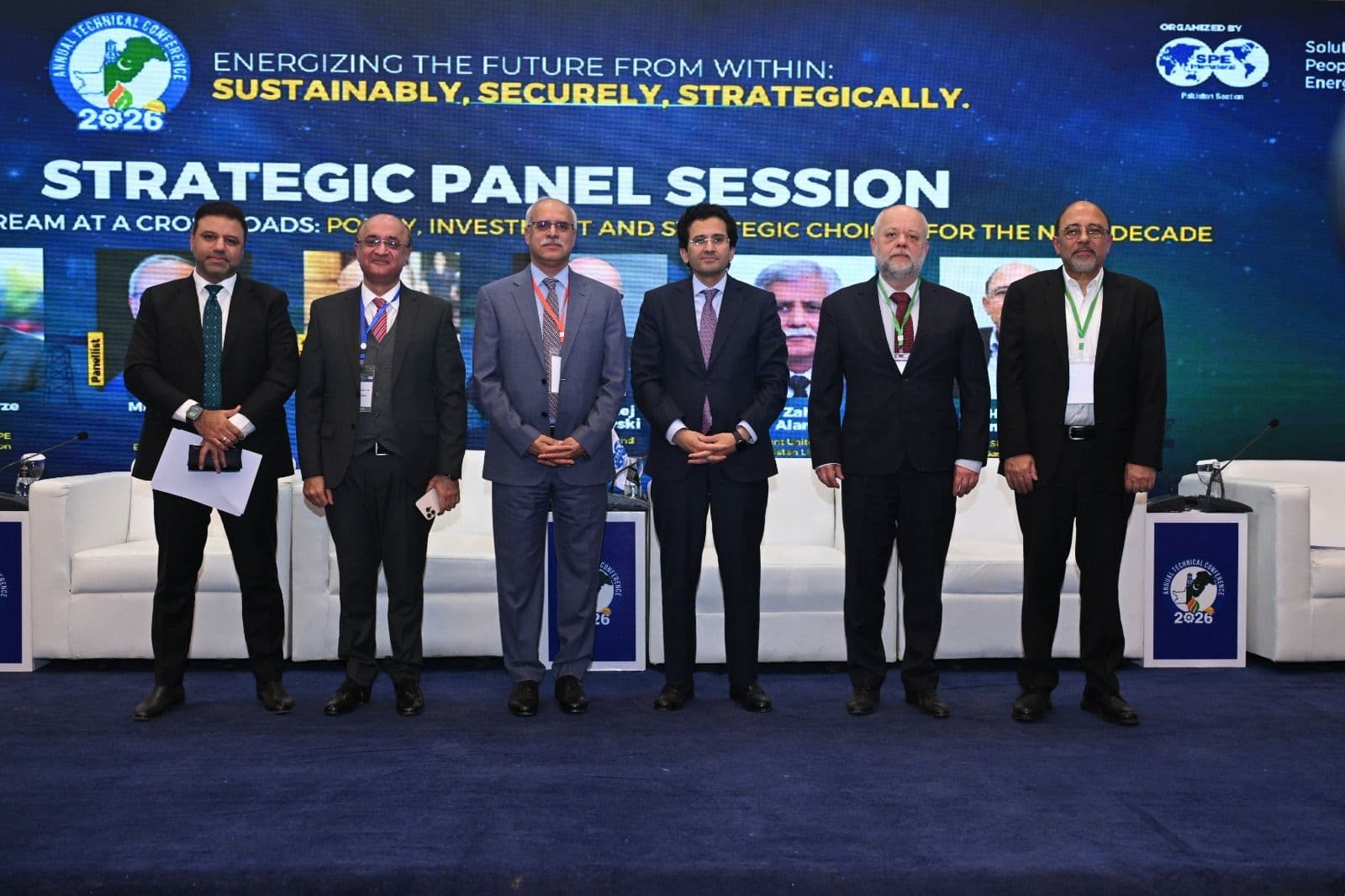
MariEnergies took center stage at the 31st Annual Technical Conference (ATC) & Exhibition 2026, held on January 28–29 at Serena Hotel, Islamabad, reaffirming its leadership role in Pakistan’s upstream oil and gas sector and its commitment to strengthening national energy security. A key highlight of MariEnergies’ presence was the leadership of Mr. Faheem Haider, Managing Director & CEO MariEnergies, who served as Chairman of ATC 2026. In this role, he provided strategic direction to the conference, shaping its vision, technical agenda, and industry dialogue around sustainable growth, innovation, and indigenous resource development. His stewardship ensured strong alignment between industry priorities and Pakistan’s long-term energy objectives. MariEnergies’ operational excellence and integrated service capabilities were showcased at the Mari Services booth, which was visited by the Advisor on Privatization & Chairman Privatization Commission, Mr. Muhammad Ali, and the Federal Minister for Energy (Petroleum Division), Mr. Ali Pervaiz Malik. During the visit, MariEnergies’ leadership briefed the dignitaries on ongoing projects, technology deployment, and initiatives focused on maximizing indigenous production and enhancing energy resilience. Aligned with the theme “Energizing the Future from Within: Sustainably, Securely, Strategically,” MariEnergies highlighted its continued focus on exploration and production excellence, digital transformation, artificial intelligence, industry–academia collaboration, and investor confidence; key pillars of the company’s long-term growth strategy. Through its leadership, technical contributions, and active engagement with stakeholders, MariEnergies once again demonstrated its role as a driving force behind Pakistan’s upstream energy ecosystem. The company remains committed to delivering reliable energy solutions, advancing innovation, and unlocking the country’s indigenous potential in partnership with government, academia, and industry.
Mar 3, 2026ISLAMABAD: Federal Minister for Petroleum Ali Pervaiz Malik was called on by the representatives of the Pakistan Petroleum Exploration and Production Companies Association (PPEPCA) headed by its Chairman Ali Taha Al-Temini - country manager KUFPEC, to discuss key opportunities and challenges in the country’s oil and gas sector. Minister Ali Pervaiz Malik acknowledged PPEPCA’s vital role in the energy sector and underscored the government’s commitment to facilitating a conducive business environment. He said that the oil and gas exploration sector is a cornerstone of Pakistan’s economy. The government is focused on reducing the import reliance of sector. The PPEPCA represents leading exploration and production companies operating in Pakistan, playing a pivotal role in the country’s energy landscape. During the discussions, the PPEPCA highlighted its members’ role in bolstering Pakistan’s energy supplies and generating substantial revenue for the national exchequer. The association also raised operational issues impacting exploration and production activities. Ali Pervaiz Malik assured PPEPCA of the government’s full support in resolving industry challenges, emphasising a collaborative approach to ensure sustainable growth in Pakistan’s petroleum sector. The PPEPCA members welcomed the minister’s proactive approach and expressed optimism about efforts to enhance exploration activities, attract investment, and drive economic progress. The meeting concluded with a mutual commitment to strengthen public-private cooperation for the sustainable development of Pakistan’s petroleum sector. The delegation included Andrzej Kaczorowski - MD Polish Oil and Gas Company, Faheem Haider - MD Mari Energies, Zaheer Alam - President United Energy Pakistan, Kamran Ahmed - CEO Orient Petroleum Inc, Kamran Ajmal Mian - CEO Prime Pakistan among others. Copyright Business Recorder, 2025
Mar 3, 2026The “cash flow crisis” threatening petroleum sector exploration and production (E&P) companies, forcing them to substantially reduce seismic activities and cut operations by 50 percent, hasn’t just leapt out of the air. For, long before Pakistan Petroleum Exploration and Production Companies (PPEPCA) wrote to caretaker Energy Minister Mohammad Ali about an impending gas supply crisis — just when the government’s own fiscal problems will prevent the same old trick of buying expensive LNG at the 11th hour – they also warned the finance and energy ministers of the former PDM coalition. But nothing was done about the “acute crisis owing to the default of the Sui gas companies”. Now, outstanding receivables of PPEPCA member companies OGDCL, PPL and GHPL, as of 15 August 2023, have risen to Rs1.361 trillion ($4.4 billion). This crunch is forcing these companies to borrow at very high rates, between 25 and 30 percent, to run gas production operations and leaving them with no option but to shut down much of their planned exploration and development drilling operations. So, the writing on the wall is clear. Failing urgent payments by the defaulting companies, there will be a major cutback in gas supply and therefore a very serious crisis. Yet it’s also clear that the government has neither the cash nor the authority – thanks to the IMF programme – to bail out the Sui gas companies like before. Therefore, there’s no choice but to brace for yet another crippling crisis. The inability of the previous government to take timely action is one of those things that are truly shocking, yet still not really surprising, about Pakistan’s brand of democracy. At the heart of the Sui companies’ fiscal paralysis is the policy of not revising consumer prices enough to cover their revenue requirements. And the coalition government, most likely, didn’t want to take any unpopular steps after it had already alienated and infuriated the public with expensive petrol, expensive electricity and even an incrementally expensive dollar. That means, in all likelihood, that the gas supply crunch will be accompanied by substantially revised consumer prices as well. PPEPCA has already asked the caretaker government to ensure the provision of a budgetary grant/tariff differential subsidy (TDS) of at least Rs 500 billion to the Sui companies for partially adjusting accumulated revenue shortfall, eventually facilitating upstream companies in meeting their operating expenditure and carrying out planned activities. It has also demanded an increase in the consumer gas price to meet revenue requirements of Sui companies which have been increasing due to high international oil prices, currency devaluation, etc. If this puts the caretaker setup in a fix, consider, for a moment, the lot of the common man, which includes both producers and consumers. Highest inflation and unemployment in the country’s history, extremely expensive electricity and fuel, unprecedented cost of living and running businesses, and now the prospect of very limited and very expensive gas also. So great is the combined pressure of all these problems, and so little time available to settle them and improve the economy’s fiscal health, that it seems the window of time in which reforms could be initiated has all but slammed shut. Unfortunately, the people can do no more than lament the fact that government after government looked the other way as these crises grew out of control and now they, ordinary Pakistanis who gained nothing from the circus at the top, must pay for all the blunders. The state’s leading institutions need to realise that this situation is stoking the kind of anger they have never confronted before. They got a hint in the riots over inflated electricity bills just a few days ago. Now they must prepare for a lot more, lot worse agitation. Copyright Business Recorder, September 23, 2023
Mar 3, 2026ISLAMABAD: Cabinet Committee on Energy (CCoE) has constituted an inter-ministerial committee under the chairmanship of Minister for Energy Hammad Azhar to fine-tune the proposed draft Model Production Sharing Agreement (MPSA), official sources told Business Recorder. On March 4, 2022, Petroleum Division presented the draft MPSA and solicited approval along with major changes from the previous approved Model of 2003. The CCoE was informed that necessary consultation with all stakeholders, i.e., the Finance Division, the State Bank of Pakistan, the Ministry of Planning Development and Special initiatives, the FBR, the Ministry of Maritime Affairs, GHPL, and PPEPCA has been done. Petroleum Division, in its draft MPSA proposed upward revision in existing incentives including windfall levy to attract investment in exploration of oil and gas reserves. Petroleum licensing in Pakistan is divided into four onshore zones and one offshore zone on the basis of risk and investment requirements. The total sedimentary area of Pakistan is 880,301 square kilometres of which onshore area is 597,678 sq. km and offshore area is 282,623 sq. km. Pakistan Petroleum (Exploration and Production) Policy 2012 was approved by the Council of Common Interests (CCI) on August 8, 2022 which envisages execution of Petroleum Concessions Agreements (PCAs) for onshore areas and Production Sharing Agreement (PSA) for the offshore areas. Internationally, mostly two types of agreements are in practice - Concession Agreements and Production Sharing Agreements. Normally PSAs are followed where risk and investment is higher and chances of bid discoveries exist. PSAs allow the E&P companies to recover their cost rapidly through production sharing. Internationally the award of the Block is decided on the basis of: (i) exploration program or (ii) production sharing or (iii) both. The sources said, since there is no discovery encountered in the offshore area of Pakistan and there is dire need for more exploratory efforts; therefore, it has been reflected in the Petroleum Policy, 2012 and draft MPSA that the award of Block will be decided on the basis of highest exploration work. Prior to promulgation of Petroleum Policy 1994 Petroleum Agreements were based on negotiations. Thereafter, in order to avoid any discrimination, the concept of standard terms and conditions in the shape of Model Agreement was introduced for the first time in 1994. To accelerate exploitation of indigenous natural resources by attracting foreign investment with state-of-the-art technology, Government of Pakistan introduced the first offshore package of terms based on production sharing arrangements in the Petroleum Policy 1997. However, MPSA could not be developed. The 1997 Policy was replaced by Petroleum Policy 2001. Accordingly, MPSA was developed for the first time in year 2003, under which nineteen (19) PSAs were signed. Subsequently, Petroleum Policies 2007, 2009 and 2012 were introduced but MPSA could not be developed. To implement the Policy for onshore areas, Pakistan onshore Petroleum Exploration and Production Rules along with model PCA were developed and the same are being implemented. Petroleum Division in its summary argued that the incentives of Policy 2012 cannot be exercised in the offshore area and no new exploration licences can be granted. Petroleum Division said that in view of the existing exploration position in the country, while remaining within the overall framework enunciated in the approved Policy 2012, Petroleum Division has developed MPSA. Moreover, in accordance with the drive of Ease of Doing Business, the ECC of the Cabinet on November 27, 2019 approved various amendments in Pakistan Petroleum (Exploration and Production) Rules, 2013 (Onshore Rules, 2013) that have been incorporated in the Rules and notified in the official Gazette vide SRO.29 (of January 14, 2020). Similar dispensations have been incorporated in the MPSA. Apart from Policy 2012, CCI has also approved incorporation of explicit clause for imposition of royalty on LPG at market value in new MPCA. Similar insertion is being made in Draft MPSA on the analogy of MPCA. Furthermore, upfront price for oil and gas has been offered in accordance with Petroleum Policy 2012, whereas, in MPSA 2003, the price was based on negotiations. Bonanza of $ 1/ MMBSTU will be given over and above wellhead gas price for first three offshore discoveries in accordance with the 2012 Petroleum Policy. The base price for windfall levy has also been revised from $ 24 per barrel to $ 40 per barrel in line with the 2012 Petroleum Policy. Furthermore, the percentage share for windfall levy has also been increased from 50% to 60% as an incentive for the contractors, the sources added. During discussion in the CCoE, Asad Umar, Minister Planning, Development and Special Initiatives/ Chairman CCoE stated that as no fresh policy change/ decisions have been sought from the forum and only multiple policy decisions taken during last few years’ have been incorporated in the draft MPSA; therefore, there was no need to bring it for approval. The Minister for Science and Technology stated that there was a need to have a comprehensive view of the draft MPSA and the Petroleum Policy before taking any decision. The Secretary Petroleum stated that the agreement has to be signed on behalf of the Federal Government; therefore, it must be approved by the Cabinet. The Ministry of Law & Justice suggested a fresh legal vetting of the draft, in view of the discussion during the meeting. The forum agreed to the request. After detailed discussion the CCoE directed Law and Justice Division to review the Draft Agreement and submit its report within two weeks. The CCoE also constituted a committee under the chairmanship of Minister for Energy and comprising of Minister for Science and Technology, SAPM on CPEC Advisor the Prime Minister on Commerce & Investment and Secretary, Petroleum Division to revisit Petroleum Policy (onshore & offshore) in a holistic manner and submit recommendations to bring improvement and remove bottlenecks. It was further directed that the Committee shall submit its report to the CCoE within three months. Copyright Business Recorder, March 16, 2022
Mar 3, 2026