
News & Events / Latest News

Oil and Gas Development Company Limited (OGDC) has signed an agreement with US energy technology company Baker Hughes to deploy Mature Assets Solutions aimed at reviving ageing oil and gas wells and increasing Pakistan’s indigenous hydrocarbon production. The agreement was signed at OGDC Headquarters in Islamabad as part of the company’s Production Optimisation Drive. Special Secretary Petroleum Mirza Nasiruddin Mashood Ahmad and US Chargé d’Affaires Natalie A. Baker attended the signing ceremony as chief guests. OGDC MD/CEO Ahmed Hayat Lak and senior officials from both companies were also present.
Sep 2, 2026
Mr. Jehangir Saifullah Khan, Chief Executive, Saif Energy Limited and Member of the Executive Committee of PPEPCA, visited the Association’s new Secretariat at 3rd Floor, SNC Center, Plot No. 12-D (East), Fazal-e-Haq Road, Blue Area, Islamabad, on August 31, 2026. Secretary General PPEPCA, Mr. Ibrar Khan, expressed his sincere appreciation to Mr. Jehangir Saifullah Khan for his valued visit and continued support and engagement with PPEPCA. The visit provided an opportunity to discuss matters of mutual interest and reaffirm the importance of continued collaboration among PPEPCA’s Executive Committee and member companies in supporting the Association’s objectives and the exploration & production sector. Islamabad | August 31, 2026
Sep 2, 2026
Special Secretary, Petroleum Division, Mr. Mashood Khan, visited the new Secretariat of the Pakistan Petroleum Exploration & Production Companies Association (PPEPCA) at 3rd Floor, SNC Center, Plot No. 12-D (East), Fazal-e-Haq Road, Blue Area, Islamabad, on September 01, 2026. Secretary General PPEPCA, Mr. Ibrar Khan, expressed his sincere appreciation and special thanks to Mr. Mashood Khan for his valued visit and for taking the time to visit the Association’s new Secretariat. The visit provided an opportunity to exchange views and further strengthen the professional engagement and coordination between PPEPCA and the Petroleum Division. Islamabad | September 01, 2026
Sep 2, 2026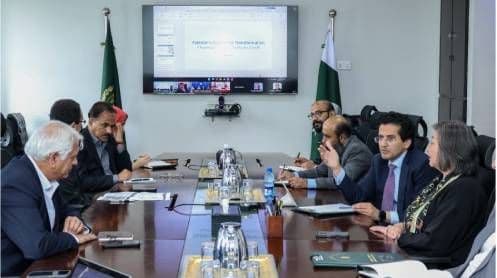
he Petroleum Division, with technical support from the World Bank, has prepared a roadmap to reform Pakistan's downstream gas sector by introducing a competitive market structure. The proposed reforms include the unbundling of Sui Northern Gas Pipelines Limited (SNGPL) and Sui Southern Gas Company Limited (SSGCL) into separate transmission, distribution, and gas trading businesses. The roadmap also envisages strengthening the regulatory framework, promoting private sector participation, rationalizing gas pricing mechanisms, and improving the financial sustainability of the gas sector. The reform package is expected to be submitted to the Prime Minister for consideration as part of the government's broader energy sector reform agenda.
Aug 5, 2026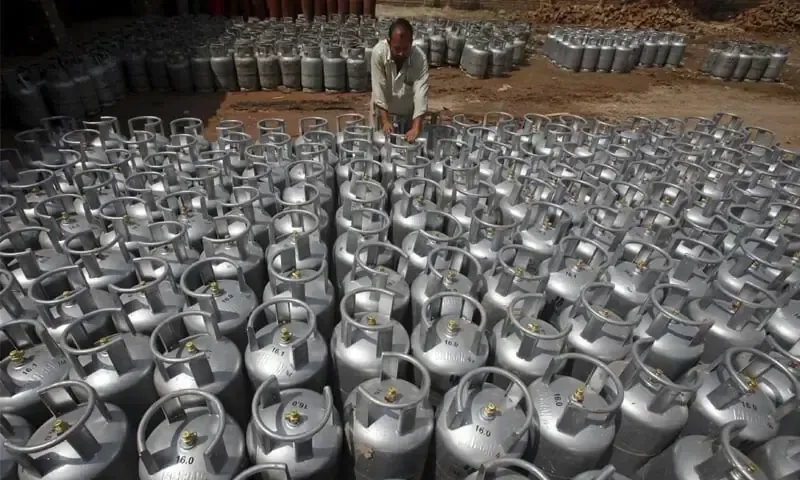
Mari Energies Limited has successfully completed Pakistan's first competitive third-party natural gas sale under the Framework for Sale of Gas to Third Parties. The company awarded up to 17.5 MMSCFD of gas from the Spinwam discovery in the Waziristan Block to Universal Gas Distribution Company (UGDC) through a competitive bidding process. The transaction marks the first practical implementation of the government's third-party gas sale framework, allowing eligible exploration and production companies to market a portion of gas from qualifying discoveries directly to private buyers. The initiative is expected to encourage upstream investment, improve gas commercialization, and contribute to the development of a more competitive domestic gas market.
Aug 5, 2026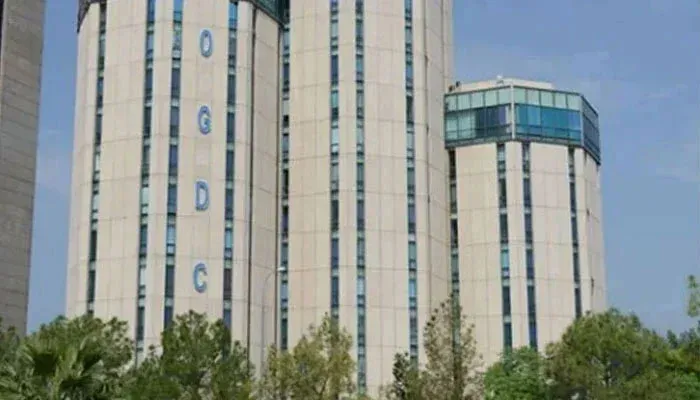
Date: 5 August 2026 OGDCL has signed a Memorandum of Understanding (MoU) with the Pakistan Institute of Nuclear Science and Technology (PINSTECH) to jointly develop technologies for commercial lithium extraction from geothermal brines. The initiative follows OGDCL's recent discovery of high-grade lithium concentrations in geothermal brines at the Wahid Bakhsh Well in Khairpur, Sindh. The collaboration aims to assess the commercial viability of lithium extraction and support Pakistan's entry into the critical minerals sector. OGDCL also plans to evaluate additional geothermal wells to determine the country's broader lithium resource potential, contributing to future energy transition and mineral development initiatives.
Aug 5, 2026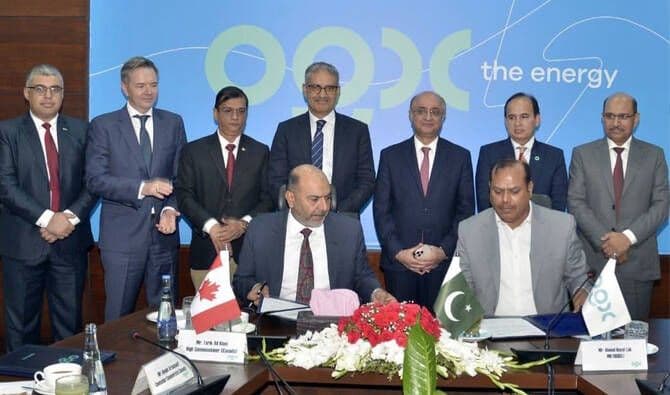
Oil & Gas Development Company Limited (OGDCL) has entered into a strategic agreement with Canadian firm Synergetic Oil Tools Inc. to deploy advanced Passive Energy Tool (PET) technology at selected heavy oil wells in Pakistan. The technology is designed to enhance heavy oil production by improving reservoir performance, reducing chemical consumption, minimizing well interventions, and lowering operating costs. The collaboration forms part of OGDCL's broader strategy to enhance domestic hydrocarbon production through the adoption of innovative technologies. Increased heavy oil recovery is expected to strengthen Pakistan's energy security by reducing reliance on imported petroleum products while improving the efficiency of existing producing fields.
Aug 5, 2026The Government of Pakistan has approved a set of amendments to the Pakistan Oil Refining Policy 2023, a decision that marks one of the most consequential interventions in the country’s downstream petroleum sector in recent years. The amendments are designed to unlock investment in refinery modernisation, enable the production of cleaner fuels and reduce the country’s long-standing dependence on imported refined petroleum products. The reform effort has been led by the Federal Minister for Petroleum, Ali Pervaiz Malik, who has consistently maintained that Pakistan cannot secure its energy future without a refining sector that is modern, efficient and commercially viable. The approved amendments translate that position into concrete policy. Pakistan’s refineries have, for years, operated under configurations designed for an earlier era. The result has been a structural imbalance: the country produces more of certain fuel grades than the market requires, while importing large volumes of the refined products it consumes most. Every barrel of refined fuel purchased abroad places pressure on foreign exchange reserves and exposes the economy to the volatility of international markets. "Refinery upgradation projects are capital intensive and long in gestation, and no investor commits to them without a stable and predictable policy environment. By addressing this directly, the Government has removed a critical barrier." Upgrading refinery capacity addresses that imbalance at its source. When domestic refineries are able to process crude into higher-value, cleaner products, the country imports less, retains more value within the national economy and gains a measure of insulation from external price shocks. This is not simply an industrial question. It is a question of economic sovereignty. The environmental dimension is equally significant. The shift towards Euro-V specification fuels, with their substantially lower sulphur content, will improve air quality in urban centres where vehicular emissions remain a persistent public health concern. Cleaner fuel also supports the performance and longevity of modern engines, an increasingly relevant consideration as Pakistan’s vehicle fleet is upgraded. The objectives of the amended policy are clear enough. It encourages refineries to invest in the upgradation and modernisation of existing facilities, it enables and supports the production of cleaner Euro-V specification fuels, it works to reduce reliance on imported refined petroleum products, and it strengthens Pakistan’s long-term energy security alongside domestic refining capacity. Taken together, these measures move the sector from a defensive posture to a developmental one. Rather than managing decline, the policy framework now creates the conditions under which refineries can plan, invest and compete. For the industry, the amendments provide the regulatory clarity and commercial confidence that large-scale capital investment requires. Refinery upgradation projects are capital intensive and long in gestation, and no investor commits to them without a stable and predictable policy environment. By addressing this directly, the Government has removed a critical barrier. The practical effect for refiners is an environment in which modernisation becomes bankable, cleaner fuel production becomes achievable at scale, and the competitiveness of Pakistan’s refining sector improves both at home and across the region. For the country at large, the benefits are broader and longer in horizon. Reduced dependence on imported refined products will ease pressure on the import bill. Better fuel quality will improve environmental performance in ways that can be measured rather than merely asserted. A deeper domestic refining base will leave Pakistan less exposed to the decisions of others. There is also an employment and skills dimension that deserves mention, because refinery upgradation projects generate sustained demand for engineers, technicians, project managers and a wide range of allied services, and the industrial activity associated with them tends to concentrate around refinery sites, spreading economic benefit well beyond the plants themselves. The Federal Minister for Petroleum has repeatedly reiterated that the Government remains committed to advancing policy reforms that encourage investment, strengthen domestic refining capacity and support Pakistan’s long-term energy security. These amendments give practical effect to that commitment. What distinguishes this intervention is its emphasis on consultation. The framework has been shaped through engagement with the industry rather than imposed upon it, an approach that improves both the quality of the policy and the likelihood of its successful implementation. It reflects a wider shift in the Government’s method of working with the productive sectors of the economy: identify the constraint, consult those affected, and legislate a solution that is workable in practice. The decision has been welcomed by the industry. Chairman of the Pakistan Petroleum Exploration and Production Companies Association (PPEPCA), Masood Nabi, and Secretary General Ibrar Khan thanked the Minister for Petroleum for his efforts, noting that the amendments are expected to support refinery modernisation, encourage fresh investment and strengthen Pakistan’s downstream petroleum sector as a whole. PPEPCA looks forward to working closely with the Government and with industry stakeholders to help realise the full potential of these reforms. That expression of partnership is itself a positive indicator, because policy succeeds when those responsible for implementing it on the ground are invested in its outcome. The approval of these amendments lays the foundation for a modern, efficient and sustainable refining sector in Pakistan. The task now moves to execution: converting an enabling framework into operational upgradation projects, cleaner fuel at the pump and a measurably smaller import bill. The direction, however, is settled. Pakistan is moving towards a refining sector that serves the needs of its economy, its environment and its people. For a sector long constrained by uncertainty, that is a substantial step forward. The writer is Secretary General (Pakistan Petroleum Exploration & Production Companies Association) (PPEPCA)
Jul 31, 2026