
News & Events / Latest News
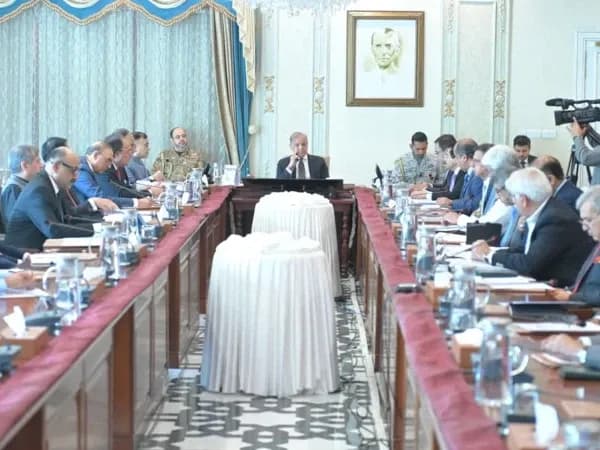
ISLAMABAD – Zubair Kasuri: Pakistan Petroleum Exploration and Production Companies Association (PPEPCA) Chairman Masood Nabi and Secretary General Ibrar Khan have welcomed the government’s approval of amendments to the Pakistan Oil Refining Policy 2023, describing the decision as a major step towards modernising Pakistan’s refining industry and attracting fresh investment. Talking to The News, Masood Nabi lauded the efforts of Federal Minister for Petroleum Ali Pervaiz Malik, saying the minister had demonstrated strong leadership and remained fully committed to addressing the long-standing challenges facing Pakistan’s refining sector. He said the approval of the amendments reflected the government’s resolve to strengthen the downstream petroleum industry and create a more investment-friendly environment. Secretary General Ibrar Khan said the policy amendments would encourage refinery upgradation, facilitate the production of cleaner Euro-V specification fuels and enhance the competitiveness of Pakistan’s refining sector. He appreciated the efforts of Federal Minister Ali Pervaiz Malik, saying the minister had worked tirelessly to resolve key issues faced by the refining industry. “His leadership and commitment have helped remove major policy bottlenecks, paving the way for these important reforms,” he said. Ibrar Khan added that the amendments would reduce Pakistan’s dependence on imported refined petroleum products, improve fuel quality, enhance domestic refining capacity and contribute to the country’s long-term energy security. Both Masood Nabi and Ibrar Khan said PPEPCA looked forward to working closely with the Ministry of Petroleum, the government and industry stakeholders to ensure the effective implementation of the reforms and to help realise the full potential of Pakistan’s refining sector.
Jul 30, 2026
An appreciation on behalf of Pakistan Petroleum Exploration and Production Companies Association Some reforms are announced. Others are negotiated. A rare few are simply delivered — quietly, decisively, and against odds that most policymakers prefer not to engage. The downward revision of Pakistan's captive gas levy belongs firmly to that third category. And the credit for it belongs, unambiguously, to one man: Petroleum Minister Ali Pervaiz Malik. Until this month, the Captive Power Plant levy stood at Rs1,303 per mmBtu, anchored to the peak B3 industrial electricity tariff under a methodology that had ceased to function as a price signal. In practice, it had become a structural penalty on industrial gas consumption — pricing efficient plants out of operation, hollowing out gas demand, and pushing Sui company losses past Rs104 billion in the first half of the fiscal year alone. Following Malik's formal proposal during the IMF's third review, the methodology has been recalibrated to a weighted average of peak and off-peak B3 rates. The revised levy now stands at approximately Rs522 per mmBtu — a near 60 per cent reduction in a single move, with relief expected to hold across cycles in the 30 to 60 per cent range. This was not a minor concession. It was the dismantling of a policy instrument that had outlived its original logic. What it means for gas production companies and gas utility companies? For Pakistan's gas exploration and production sector, the previous levy was actively lengthening the circular debt cycle. Industrial demand was being driven off the gas network, indigenous production was losing its paying offtaker, RLNG was being diverted to subsidised consumption, and Sui losses were aging into receivables on E&P balance sheets. Aged receivables become deferred development. Deferred development becomes lost reserves and lost national output. Circular debt, in our industry, is the line between drilling next year's well and walking away from it. For the gas utility companies, the same distortion was equally corrosive: by suppressing high-load industrial offtake, it reduced throughput and system utilisation, worsened revenue recovery, and accelerated the accumulation of unpaid receivables and payables across the chain. It also incentivised inefficient allocation decisions, including RLNG diversion to subsidised segments, thereby heightening the financing gap that ultimately surfaces as circular debt. The recalibrated levy begins to repair that architecture by re-anchoring demand on the network, improving the utilities' cash-flow dynamics, and restoring a more sustainable basis for procurement, dispatch, and settlement. What it means for industrial consumers? For more than two years, captive consumers — particularly in textiles, the country's largest export sector — had been operating at gas prices that priced them out of regional markets. Indian, Bangladeshi, and Chinese competitors were accessing gas at $6–9 per mmBtu, while Pakistani exporters faced effective costs well above that. Captive offtake fell sharply, RLNG surpluses grew, and an $18 billion textile export base came under sustained pressure. It is therefore unsurprising — and entirely deserved — that the All Pakistan Textile Mills Association (APTMA) has publicly issued a thank-you note acknowledging the Petroleum Ministry's efforts, and that the Pakistan Textile Council has expressed its appreciation. When industry bodies that have spent a year writing critical letters shift, in unison, to acknowledgement, the reform has earned that response on its merits. Leadership measured in outcomes The petroleum minister could have lobbied for headlines. He chose technical engagement. He raised the proposal at the third review with documented evidence; the IMF deferred. He returned with sharper data, pressed the case, and converted a deferral into approval — while accepting candidly the conditions attached. That intellectual honesty is what gave the proposal its credibility at the negotiating table. In appreciation On behalf of PEPPCA, Pakistan's gas exploration and production companies, we extend our genuine and considered appreciation to the Honourable Petroleum Minister Ali Pervaiz Malik. His advocacy was patient where it needed to be patient, decisive where decisiveness was required, and unfailingly grounded in evidence. Reform of this scale is never a solo achievement, and the professional teams at the Petroleum Division, the Finance Division, and the regulators deserve recognition for the technical groundwork that supported the case. But it does require an anchor — someone willing to absorb the difficulty and hold the line. Malik has been that anchor. The gas production industry and industrial consumers have duly taken note of this decision. The decision represents a balanced, win–win outcome for all stakeholders by enabling E&P companies to optimise gas production through the restoration and expansion of demand from a segment with the demonstrated capacity and willingness to afford the supply. This, in turn, supports improved cash-flow discipline across the value chain, contributes to the containment of circular debt, and reduces the fiscal and tariff distortions associated with cross-subsidisation. By strengthening the sustainability of the gas market, the decision is expected to support broader industrial activity, protect employment, and generate the consequential economy-wide benefits that follow. PEPPCA records its appreciation and stands ready to support the work that follows. The author is Secretary General of the Pakistan Petroleum Exploration and Production Companies Association (PPEPCA).
Jul 30, 2026In pursuance of the relevant provisions of the Pakistan Petroleum Exploration & Production Companies Association (PPEPCA) Articles of Association (AoA), the Trade Organizations Act, 2013 and the Trade Organizations Rules, 2013, notice is hereby given for the election of Ten (10) Members of the Executive Committee for the term 2026-2028. The tenure of the present Executive Committee, including the Chairman, Senior Vice Chairman and Vice Chairman, shall expire on September 30, 2026. Accordingly, the election process has been initiated to elect the new Executive Committee in accordance with the applicable provisions of the AoA and the Trade Organizations Rules, 2013. The election of the Executive Committee Members shall be held during the 33rd Annual General Meeting (AGM) scheduled for Wednesday, September 23, 2026. In the event that the number of valid nominations exceeds the number of seats available, the election shall be conducted by Secret Ballot during the AGM. The detailed Election Schedule is enclosed as Annex "A", while the List of Eligible Voters is enclosed as Annex "B". Members are requested to carefully follow the timelines specified in Annex "A", as all statutory actions shall be undertaken strictly in accordance with the prescribed schedule. Eligibility to Contest The Managing Director, Chief Executive Officer or Principal Officer of a member company is eligible to contest the election for membership of the Executive Committee, subject to the provisions of the PPEPCA Articles of Association and the applicable provisions of the Trade Organizations Act, 2013 and the Trade Organizations Rules, 2013. Submission of Nomination Papers Nomination papers shall be submitted on the prescribed form attached as Annex "C". Each nomination shall: • be duly proposed and seconded by registered voters of member companies; • be signed by the candidate in token of acceptance; • contain all mandatory information required in the prescribed form; and • reach the PPEPCA Secretariat not later than the close of business on Tuesday, August 25, 2026. Incomplete nomination papers or nominations received after the prescribed deadline shall not be entertained. Election of Office Bearers In accordance with Rule 21(11) of the Trade Organizations Rules, 2013, the Chairman, Senior Vice Chairman and Vice Chairman of PPEPCA shall be elected by and from amongst the newly elected Ten (10) Members of the Executive Committee at the first meeting of the Executive Committee convened after completion of the election process. Authority to Vote Where the Chief Executive Officer of a member company is unable to attend the Annual General Meeting personally, he may authorize another person, in writing, to cast the vote on his behalf. The prescribed Authority Letter is attached as Annex "D" and must reach the PPEPCA Secretariat not later than the close of business on Tuesday, September 8, 2026. National Tax Number (NTN) and Sales Tax Registration Number (STRN) As required by the Directorate General of Trade Organizations, the List of Eligible Voters shall contain the National Tax Number (NTN) and Sales Tax Registration Number (STRN), wherever applicable. Accordingly, member companies that have not already provided these particulars are requested to furnish the same to the PPEPCA Secretariat on or before Friday, July 24, 2026. Eligibility to Vote Only those member companies whose annual membership subscription has been fully paid up to June 30, 2026, and whose names appear in the Final List of Eligible Voters, shall be entitled to participate in the election process. Members are requested to carefully review all enclosed annexures and ensure timely compliance with the prescribed requirements and deadlines to facilitate the orderly conduct of the election process. Should any clarification be required regarding the election process or the enclosed documents, members may contact the PPEPCA Secretariat during office hours.
Jul 28, 2026
Mr. Ibrar Khan, Secretary General PPEPCA was invited as the Chief Guest at NUST, where they addressed students and faculty on industry-academia collaboration, and future opportunities for young professionals
May 14, 2026
May 13, 2026 (MLN): Pakistan Petroleum Limited (PSX:PPL) has completed workover operations for the sidetracking of Well Adhi South-2 in the Adhi Field, achieving a significant turnaround for a well that had been out of production. The company holds a 39% Working Interest in the field alongside Joint Venture partners Oil and Gas Development Company Limited (OGDCL) with 50% and Pakistan Oilfields Limited (POL) with 11%. Originally drilled as an appraisal well in 2020, Adhi South-2 initially tested at approximately 800 barrels per day (bpd) of oil before its output gradually declined to around 200 bpd. A hydraulic fracturing attempt carried out in 2023-24 failed to revive the well, as high water cut caused it to cease flowing post-fracturing. Multiple rig-less intervention efforts, including gas-lift (CTGL), were also unsuccessful in restoring production. The Adhi Joint Venture subsequently opted to sidetrack the well to bypass the water-bearing zone. The operation wrapped up in just 28 days well ahead of the planned 48-day schedule. Post rig-release testing has placed the well's production at approximately 850 bpd of oil and around 1 MMscfd of gas. The successful sidetrack is expected to lift current production levels at the Adhi Field and builds confidence in applying similar remediation strategies to other underperforming wells across the field. The aforementioned information was disseminated through a notification to Exchange.
May 13, 2026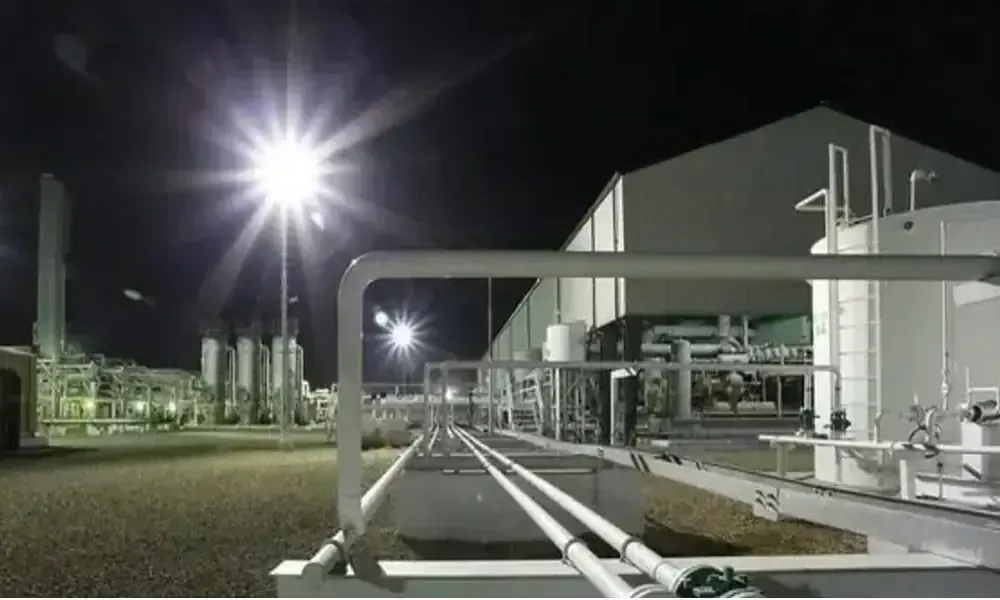
ISLAMABAD: Pakistan Petroleum Exploration & Production Companies Association (PPEPCA) welcomed the federal government’s decision of downward revision of captive gas levy. While talking to Business Recorder, Secretary General PPEPCA Ibrar Khan said till May the Captive Power Plant levy stood at Rs1,303 per mmBtu, anchored to the peak B3 industrial electricity tariff under a methodology that had ceased to function as a price signal. In practice, it had become a structural penalty on industrial gas consumption — pricing efficient plants out of operation, hollowing out gas demand, and pushing Sui company losses past Rs104 billion in the first half of the fiscal year alone. READ ALSO: Correcting the captive gas levy Following Petroleum Minister’s formal proposal during the IMF’s third review, the methodology has been recalibrated to a weighted average of peak and off-peak B3 rates. The revised levy now stands at approximately Rs522 per mmBtu — a near sixty percent reduction in a single move, with relief expected to hold across cycles in the 30 to 60 percent range. For Pakistan’s gas exploration and production sector, he said that the previous levy was actively lengthening the circular debt cycle. Industrial demand was being driven off the gas network, indigenous production was losing its paying off-taker, RLNG was being diverted to subsidised consumption, and Sui losses were aging into receivables on E&P balance sheets. He said, “For more than two years, captive consumers — particularly in textiles, the country’s largest export sector — had been operating at gas prices that priced them out of regional markets”. Indian, Bangladeshi, and Chinese competitors were accessing gas at $6–9 per mmBtu, while Pakistani exporters faced effective costs well above that. Captive offtake fell sharply, RLNG surpluses grew, and an $18 billion textile export base came under sustained pressure, he added. On behalf of PEPPCA, Pakistan’s gas exploration and production companies, he said, “we extend our genuine and considered appreciation to the Honourable Federal Minister for Petroleum, Ali Pervaiz Malik. His advocacy was patient where it needed to be patient, decisive where decisiveness was required, and unfailingly grounded in evidence. Reform of this scale is never a solo achievement, and the professional teams at the Petroleum Division, the Finance Division, and the regulators deserve recognition for the technical groundwork that supported the case”.
May 11, 2026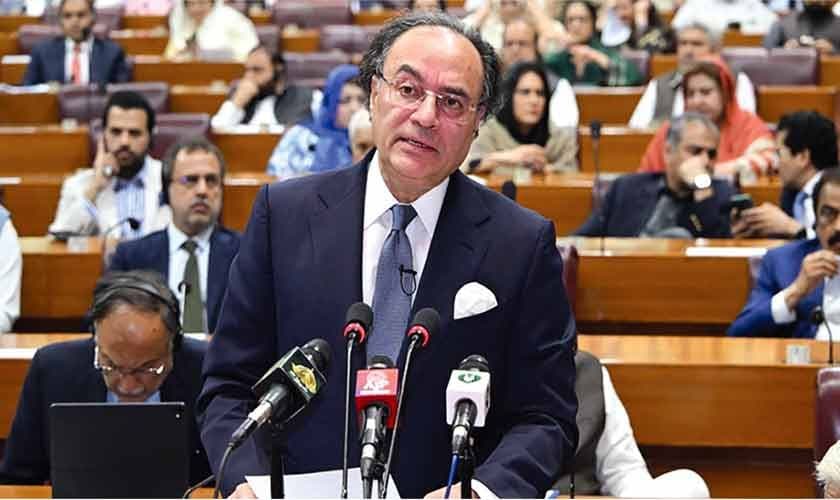
The ongoing conflict in the Persian Gulf has reestablished the importance of the oil and gas sector in the global economy. While fossil fuel investments were once dismissed as 'sunk costs', the transition towards a multipolar world and the emergence of distinct economic blocs have renewed the need for a balanced energy mix and sustained investment in the sector. Pakistan, positioned at a strategic geopolitical crossroads, has asserted itself diplomatically. However, to complement this with economic strength, the country needs forward-looking budgetary planning that addresses structural challenges within its oil and gas sector. The upcoming budget offers a crucial opportunity to lay the foundations for economic prosperity. To achieve this, the government must tackle key fiscal hurdles currently affecting both downstream and upstream segments of the oil and gas sector. Similar concerns have also been highlighted by the Overseas Investors Chamber of Commerce and Industry, which has repeatedly emphasised the importance of tax rationalisation and a stable policy environment to encourage long-term investment in Pakistan’s key sectors. Pakistan’s effective corporate tax rate, including a 10 per cent super tax, stands at around 39 per cent, significantly higher than regional averages of 17-25 per cent. This discourages foreign investment and limits domestic growth. The government should abolish the super tax and introduce a clear plan to reduce the corporate tax rate to a competitive 25 per cent, improving investor confidence and economic activity. The oil and gas sector operates on low, regulated margins, making turnover-based taxation inequitable. Price volatility causes turnover fluctuations that do not reflect actual profitability. It is recommended that the Minimum Tax be reduced to 0.25 per cent, with a long-term goal of elimination. Companies should also be allowed to carry forward minimum tax credits for at least five years to ease financial pressure. The Finance Act 2024 introduced sales tax exemptions on major petroleum products. While seemingly beneficial, this change rendered input tax on related supplies and services 'inadmissible', significantly increasing operational costs for the downstream sector. It has also added approximately $750 million to upgrade project costs under the Brownfield Refining Policy, threatening the viability of those projects. To address this, petroleum products should be brought back into the taxable regime at a uniform rate. Additionally, the processes for input tax adjustments between the Federal Board of Revenue and provincial authorities must be harmonised to enable seamless cross-adjustments. The Finance Act 2025 imposed a drastic petroleum levy of over Rs82,000 per ton on furnace oil. This has drastically reduced local demand, forcing refineries to export at a loss and undermining financial stability. The continued losses hinder refinery modernisation efforts. Abolishing this levy is essential to ensure that Furnace Oil remains a viable back-up energy resource during times of scarcity. The brunt of Pakistan’s tax burden is borne by a narrow segment: the corporate sector and the salaried class. Increasing taxes on these groups is counterproductive. The government must focus on broadening the tax base rather than repeatedly squeezing already-taxed segments Several recent legislative changes have increased the burden on energy companies. The withdrawal of tax exemptions on government subsidies incorrectly treats policy instruments as business profits. Reinstituting these exemptions is necessary. Similarly, the petroleum supply chain is affected by multiple withholding taxes. A simplified withholding regime would improve efficiency in this high-volume environment. Entities having statutory exemptions should not be forced to repeatedly apply for exemption certificates. The requirement should be abolished or automated through the IRIS system to ensure issuance within 15 days, reducing administrative delays. The professional workforce remains central to the energy sector’s stability. High taxation on salaried individuals, including a 9.0 per cent surcharge, is driving talent away and making it difficult for regulated companies to maintain sustainable compensation structures. Reducing income tax rates for individuals, removing the surcharge and restoring reasonable tax credits are vital for talent retention. Currently, the brunt of Pakistan’s tax burden is borne by a narrow segment: the corporate sector and the salaried class. Increasing taxes on these groups is counterproductive. The government must focus on broadening the tax base rather than repeatedly squeezing already-taxed segments. By implementing these budgetary reforms, Pakistan can turn wartime economic challenges into opportunities for energy security and industrial growth.
May 6, 2026
ISLAMABAD: The oil industry has asked the State Bank of Pakistan to extend for two months or “until market conditions stabilise” the permission for the import of petroleum products on cost, insurance and freight (CIF) basis — an arrangement under which buyers assume the responsibility of import costs and final delivery following the arrival of commodities at the destination port. The request was made by the Oil Companies Advisory Council (OCAC) — an association of more than three dozen oil companies and refineries — to SBP Governor Jameel Ahmad in a letter on Monday, with around two weeks left for the 60-day relaxation to end. It was allowed keeping in view the petroleum import challenges under the prevailing geopolitical conditions, following the OCAC’s call highlighting the difficulty in obtaining adequate marine and war-risk insurance cover. Marine insurers have either withdrawn or sharply increased war-risk coverage for ships operating in the Persian Gulf and the Strait of Hormuz due to the US-Israel war on Iran. The letter to SBP, seen by Dawn, referred to OCAC’s previous appeal made in view of the “extraordinary geopolitical situation in the Middle East”. It said the subsequent permission by the SBP for CIF-based imports for 60 days had been instrumental in enabling refineries and oil marketing companies (OMCs) to secure cargoes under highly challenging market conditions. However, it said, “the situation in the region remains volatile with no meaningful de-escalation or restoration of normal shipping and insurance conditions. The constraints highlighted earlier — particularly the limited availability and exorbitant cost of marine and war-risk insurance, coupled with continued reluctance of shipowners and suppliers — still persist. Freight rates and war-risk premiums continue to remain elevated, and the operational challenges in executing imports under cost and freight arrangements have not eased.” The letter stated that the validity of SBP’s circular allowing CIF-based imports of petroleum products was set to expire on May 10. Meanwhile, it said, “the oil industry anticipates considerable challenges in sustaining uninterrupted supply chains if the current relaxation is continued at this stage”. “In view of the ongoing certainty and to ensure continuity of fuel supplies critical for national energy security — especially in light of upcoming seasonal demand — it is earnestly requested that the temporary permission for CIF imports of petroleum products (crude oil, refined petroleum products, base oil and allied materials) may kindly be extended for a further period of two months, or until market conditions stabilise,” the letter said. Follow Dawn Business on X, LinkedIn, Instagram and Facebook for insights on business, finance and tech from Pakistan and across the world.
Apr 28, 2026