
News & Events / Latest News
ISLAMABAD: The Oil and Gas Development Company Limited (OGDCL) has made Pakistan’s largest-ever oil and gas discovery from a single well at its Baragzai X-01 (Slant) exploratory well in the Nashpa Block, located in the Kohat district of Khyber Pakhtunkhwa. Baragzai X-01 is now the highest-producing well in OGDCL’s portfolio as well as in Pakistan’s history and contributes approximately 10 percent of Pakistan’s total crude oil production. The company successfully brought the well into production following the testing and completion phase. After Wednesday’s injection of 5,300 barrels of oil per day (BPD), 17 million standard cubic feet per day (MMSCFD) of gas, and 15 metric tons per day (MTD) of LPG, the cumulative production from the well has reached 15,000 barrels of oil per day and 45 million standard cubic feet per day of gas. The oil and gas production from the well is projected to reach 25,000 barrels of oil per day and 60 million standard cubic feet per day of gas in the near future. The oil and gas discovery was achieved from five different formations at the Baragzai X-01 (Slant) exploratory well. The project has been developed in one of the most challenging terrains in the country, where the OGDCL deployed advanced and latest technologies to ensure efficient and safe operations. In a significant operational achievement, an 8-kilometre pipeline was laid in record time, alongside critical modifications for gas processing and crude oil storage, and integration with Mela and Nashpa facilities. The project is expected to generate substantial economic benefits. The estimated daily revenue stands at Rs156 million, with monthly revenues projected at Rs4.7 billion and annual revenues at Rs57 billion. The development will also result in an annual foreign exchange substitution of approximately USD 329 million by reducing reliance on imported fuels. Federal Minister for Petroleum Ali Pervaiz Malik formally inaugurated the commencement of commercial production in a ceremony held at OGDC Headquarters in Islamabad. Federal Secretary Petroleum Division Hamid Yaqoob Sheikh, MD/CEO, OGDCL, Ahmed Hayat Lak, and senior officials of the company and other E&P and services companies were also present. Speaking on the occasion, Federal Minister for Petroleum Ali Pervaiz Malik congratulated OGDCL, its joint venture partners, and service providers on the achievement. He termed the discovery monumental and a significant contribution to the country’s energy security. He appreciated the efforts of Local E&P companies that have stepped up during these challenging times. He emphasised the need to further strengthen indigenous energy development and encouraged enhanced collaboration and knowledge sharing across the exploration and production sector. A commemorative shield was presented to the Federal Minister in recognition of his support for the energy sector. MD/CEO of OGDC, Ahmed Hayat Lak, appreciated the team and the unsung heroes for achieving this historic milestone. He lauded the team for delivering this success while working in one of the most challenging terrains of the country. He reaffirmed the company’s commitment to accelerating exploration activities and announced plans for further development to enhance production capacity.
Apr 16, 2026
Domestic natural gas supply to the power sector is expected to increase to around 160–170 million cubic feet per day (mmcfd) by end-April or early May, up from 85–90mmcfd currently, as the government moves to offset shortages of imported LNG and rising summer demand, Dawn reported, citing officials. They said efforts were underway to divert additional gas, including 20–25mmcfd from the CNG sector, while maintaining supplies to fertiliser plants due to concerns over urea availability and price disparities between local and imported products. The move follows warnings from the power ministry that without increased gas supply, electricity tariffs could rise significantly or lead to higher levels of loadshedding. The ministry proposed diverting gas from residential users, CNG or fertiliser sectors, though concerns were raised over potential political backlash affecting more than seven million domestic consumers. Authorities indicated that gas supply to fertiliser plants may not remain uninterrupted, with operations likely to shift to alternate scheduling to balance demand across seasons. The power division noted that the fuel cost adjustment (FCA) stood at Rs1.42 per unit for February and could have reached Rs2 without reliance on furnace oil and RLNG. It warned that FCA for May could more than double if furnace oil use increases, as its prices have more than doubled since February. The issue has been taken up by the National Coordination and Management Council to manage electricity supply and ensure availability for key economic sectors. In the absence of RLNG, around 5,000MW of efficient power plants in Punjab may become uneconomical, with generation costs rising significantly when switching to high-speed diesel or furnace oil, where the cost gap ranges from Rs20–54 per unit. Additional gas supply has become available following the completion of a pipeline linking the Bettani gas field in Lakki Marwat to Punjab, along with other system improvements. Loadshedding has already been implemented for at least two hours in recent days and is expected to increase, particularly during night hours when solar generation declines and grid demand rises. Authorities have also introduced conservation measures, including early market closures, to manage demand. Hydropower output remains uncertain despite improved water availability, with delays in Tarbela tunnels and the continued outage of the 969MW Neelum-Jhelum plant affecting supply. Ad powered by advergic.com Furnace oil remains a fallback fuel, with current stocks exceeding 500,000 tonnes, sufficient for over 35 days, though at significantly higher costs. Peak summer demand is projected to rise to 27,000–28,000MW, compared to current peak levels below 14,000MW, partly due to increased reliance on solar power. Officials expect average daily loadshedding to remain between two to three hours alongside ongoing demand management measures.
Apr 13, 2026ISLAMABAD: In the middle of oil supply challenges and pricing controversies, the government on Wednesday removed acting chairman of the Oil & Gas Regulatory Authority (Ogra) and appointed an officer of the Pakistan Administrative Service (PAS), formerly District Management Group (DMG), on an interim basis. In a notification issued by the Cabinet Division, Nabeel Ahmed Awan, a BS-22 officer of PAS, presently posted as secretary, Establishment Division, has been given the additional charge of Ogra chairman with immediate effect and for a period of three months or till the appointment of a regular Ogra chairperson. The incumbent, Shahzad Iqbal, who had also been serving as the regulator’s top official on a look-after basis, will continue in his position as Member Gas. He had earlier come under criticism during a meeting of the finance minister–led Cabinet Committee on Oil Products Monitoring for poor progress on the automation and integration of the supply chain and petroleum pricing. Participants noted that he was unable to adequately explain the situation and failed to defend the regulator’s position. The government has been running the all-important regulator on an ad hoc basis for more than a year. After the completion of his term, it extended the tenure of former chairman Masroor Khan without legal cover, instead of initiating the process to appoint a regular chairman. Earlier this year, it again refrained from appointing a permanent chairman and instead assigned the charge to Iqbal. Last week, the Ogra and Pakistan State Oil (PSO) had come under fire at a meeting of the special cabinet committee on petroleum for insufficient and lethargic online integration and automation of stock and supply position of oil products for improved visibility and monitoring. Therefore, the government decided to activate law enforcement and investigation agencies for improved monitoring of retail petroleum outlets and to check hoarding. Members of the committee had also raised questions over certain loopholes in the petroleum pricing, particularly in the diesel rate build-up. Dawn had reported that Dr Musadik Malik, who previously held the positions of energy and petroleum minister, suspected that the oil industry had apparently been allowed to windfall and proactive corrective measures were not taken as prices went through the roof. Both Malik and Finance Minister Muhammad Aurangzeb expressed displeasure that even PSO had not been able to integrate its retail outlets and depots, despite being a public sector company. Ogra was also criticised for moving too slowly on data integration, despite the process having been officially ordered more than three weeks ago. In such a situation, market manipulators appeared to have taken advantage and resorted to aggressive hoarding amid continuously rising prices both domestically and internationally. It was reported that PSO’s retail integration was close to 60pc, but the situation was even worse among private sector players in the supply chain. This was reinforced in an official statement issued by the Ministry of Finance after the meeting. “To reinforce implementation, it was decided that joint teams comprising representatives of the Petroleum Division, Ogra, FIA, and PSO will be deployed to selected PSO petrol pumps in Islamabad to support timely data entry, improve stock transparency, and ensure operational compliance,” it said. The prime minister was updated on the situation, who approved the reshuffle, official sources said. Earlier, a meeting had been called after the recent price adjustments to review the petroleum supply situation and market conditions. The meeting took a comprehensive review of petroleum stock positions, import plans, and refinery operations. The panel was informed that the overall supply position remained stable, with diesel stocks providing approximately 25 days of cover, petrol availability sufficient to meet current demand, and crude oil stocks at around 12 days of cover, supported by incoming cargoes and scheduled imports. Follow Dawn Business on X, LinkedIn, Instagram and Facebook for insights on business, finance and tech from Pakistan and across the world.
Apr 13, 2026
KARACHI: Oil and gas production in Pakistan posted a marginal increase in the third quarter of fiscal year 2025-26, supported by reduced curtailments at key fields and stronger offtake from the power sector. Oil output rose 0.9 per cent year-on-year (YoY), while gas production increased 0.6 per cent YoY during 3QFY26.Among major oil-producing assets, the TAL block led growth with a 15.7 per cent YoY increase, followed by the KPD block (14.5 per cent YoY) and Nashpa (2.6 per cent YoY). Dhok Sultan recorded a sharp 42 per cent YoY rise, though output from the Bettani and Sono fields fell significantly by 63.9 per cent and 53.2 per cent YoY, respectively. On the gas side, production gains were recorded at several key fields, including Mari (up 7.2 per cent YoY), Uch (3.7 per cent YoY), Kandhkot (8.6 per cent YoY), Nashpa (13 per cent YoY) and the TAL block (10.3 per cent YoY). However, output from Sui and Qadirpur declined by 6.5 per cent and 9.5 per cent YoY, respectively. Analysts attributed the overall increase in hydrocarbon output to lower curtailments and improved demand from the power sector.So far in calendar year 2026, listed exploration and production (E&P) companies have reported 11 discoveries. Among these, Baragzai stands out as the most significant, with an estimated incremental contribution of around 13,534 barrels of oil per day (bopd) and 147 million cubic feet per day (mmcfd) of gas. Oil and Gas Development Company (OGDC) led in discoveries, followed by Pakistan Petroleum Limited (PPL) and Mari Energies Limited.Cumulatively, oil production stood at 63,982 bopd and gas output at 2,958 mmcfd, with new discoveries contributing approximately 21 per cent to oil production and 4 per cent to gas output. According to Arif Habib Limited, OGDC is expected to post earnings of Rs42.12 billion (EPS: Rs9.79) in 3QFY26, down 11 per cent YoY. Net sales are projected to rise 17 per cent YoY, driven by modest increases in oil (up 1 per cent YoY) and gas (up 3.0 per cent YoY) production. The decline in profitability is primarily attributed to a 21 per cent YoY fall in other income, reflecting lower finance income amid a declining interest rate environment. This impact is partially offset by the unwinding of term finance certificate losses. PPL is likely to report a net profit of Rs23.09 billion (EPS: Rs8.49) in 3QFY26, up 3 per cent YoY, supported by higher production, with oil output rising 7 per cent YoY. Net sales are expected to grow 4 per cent YoY, while other income may decline sharply by 55 per cent YoY to Rs2.5 billion due to lower interest rates. Mari Energies Limited is projected to post earnings of Rs13.66 billion (EPS: Rs11.37), marking a 14 per cent YoY decline. The drop is mainly attributed to a higher effective tax rate and increased operating expenses. Production from the Mari field rose 7.2 per cent YoY, while output from Shewa increased significantly to 56 mmcfd. Pakistan Oilfields Limited is expected to report a profit of Rs6.28 billion (EPS: Rs22.11), down 5.0 per cent YoY, primarily due to a higher tax rate. Gas production is projected to increase 16 per cent YoY, while oil output declined 9.0 per cent YoY. Net sales are expected to grow 7.0 per cent YoY, supported by higher gas production.
Apr 8, 2026
ISLAMABAD: Pakistan’s energy sector is facing a fragile transition, marked by declining domestic production, rising import dependence, and uneven supply growth, according to the Pakistan Energy Yearbook 2024–25 released by the Petroleum Division and Hydrocarbon Development Institute of Pakistan. Indigenous energy production fell from 53 MTOE to 50 MTOE, while imports increased from 33 MTOE to 34 MTOE, highlighting growing reliance on external sources. Total primary energy supply rose only slightly by 1.58% to 82 MTOE, mainly due to imports of LPG, oil, coal, and electricity. LPG (+28.56%), imported electricity (+20.11%), oil (+14.51%), coal (+6.32%), and hydropower (+1.21%) increased, while natural gas, LNG (–4.1%), nuclear, and renewables declined, signalling tightening domestic availability. Final energy consumption grew 8.32%, led by commercial (+23.38%), industrial (+16.78%), transport (+9.44%), and government (+14.79%) sectors, reflecting economic recovery, though agricultural use fell 30.97% and domestic use declined slightly, raising rural access concerns. Crude oil production dropped 11.44% and gas output declined 7.52% due to ageing fields and limited drilling—only 28 exploratory and 30 development wells were completed. Despite 21 new gas and gas-condensate fields and a 26% increase in gas reserves to 23.31 TCF, production did not rise, highlighting extraction limitations. Proven oil reserves declined 1.39% to 240 million barrels. To offset shortages, petroleum imports rose—refined products +16.61%, crude oil +19.44%—supporting refinery activity. Gas imports of 8.74 MTOE filled gaps, yet overall gas consumption fell 5.77%, with industrial consumption rising 62.5% while other sectors declined, indicating prioritisation of high-value use. Coal imports surged 27.86%, compensating for a 2.66% drop in domestic output, with over half used for power generation. Power sector progress remained gradual: installed capacity increased slightly to 45,380 MW with 884 MW of new hydropower, but renewables stagnated. Electricity generation rose 3.04% to 140,420 GWh, mainly from thermal sources, with imports up 20.1%. Consumption increased in domestic (+4.6%), commercial (+5.7%), and industrial (+4.9%) sectors, while agriculture fell 31.4%, highlighting uneven distribution. Overall, Pakistan’s energy system faces rising demand amid declining domestic supply, increasing reliance on imports, stagnating renewables, and a widening gap between growing gas reserves and extraction capacity, posing risks to long-term sustainability.
Apr 8, 2026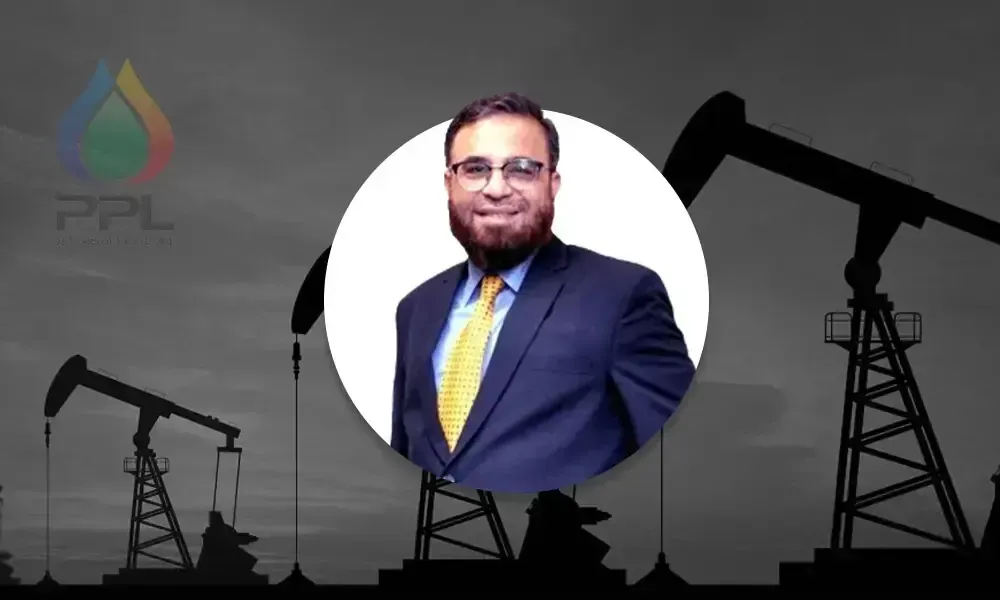
Pakistan Petroleum Limited’s (PPL) board has approved an extension in the tenure of its Chief Executive Officer (CEO), Mohammad Khalid Rehman, on an interim basis, ensuring continuity in leadership until a permanent appointment is made. “We would like to inform that the board of directors of the company at its meeting held on 7th April 2026 has approved extension in the term of appointment of Mohammad Khalid Rehman as the CEO/ Managing Director of the company with effect from 10th April 2026, until the appointment of a regular CEO of the company,” PPL informed in a notice to the Pakistan Stock Exchange (PSX) on Tuesday. Earlier in January, Rehman was appointed in the place of Sikandar Ali Memon “for a period of three months or appointment of a regular CEO of the Company, whichever is earlier”. A seasoned professional with more than 30 years of national and international experience, Rehman started his career with PPL in 2009 as Chief Accountant. During the last 27 years, he has held various senior positions, including Manager Treasury Operations, Senior Manager Finance and Senior Manager Corporate Planning, before assuming the charge as Chief Financial Officer in 2022. Before joining PPL, Rehman was associated with several reputable organisations, including Ernst & Young, Ford Rhodes Sidat Hyder, Umer Group of Companies, ORIX Leasing Pakistan Limited, State Street Fund Services Toronto, Inc., and Bank of Montreal, gaining rich experience in Pakistan, Canada and Egypt. Rehman is a fellow member of the Institute of Chartered Accountants of Pakistan, a CPA from The Institute of Chartered Accountants of Ontario, Canada, as well as an associate member of the Institute of Cost and Management Accountants of Pakistan. As one of the largest exploration and production companies in Pakistan, PPL plays a pivotal role in exploring, prospecting, developing, and producing oil and natural gas resources.
Apr 7, 2026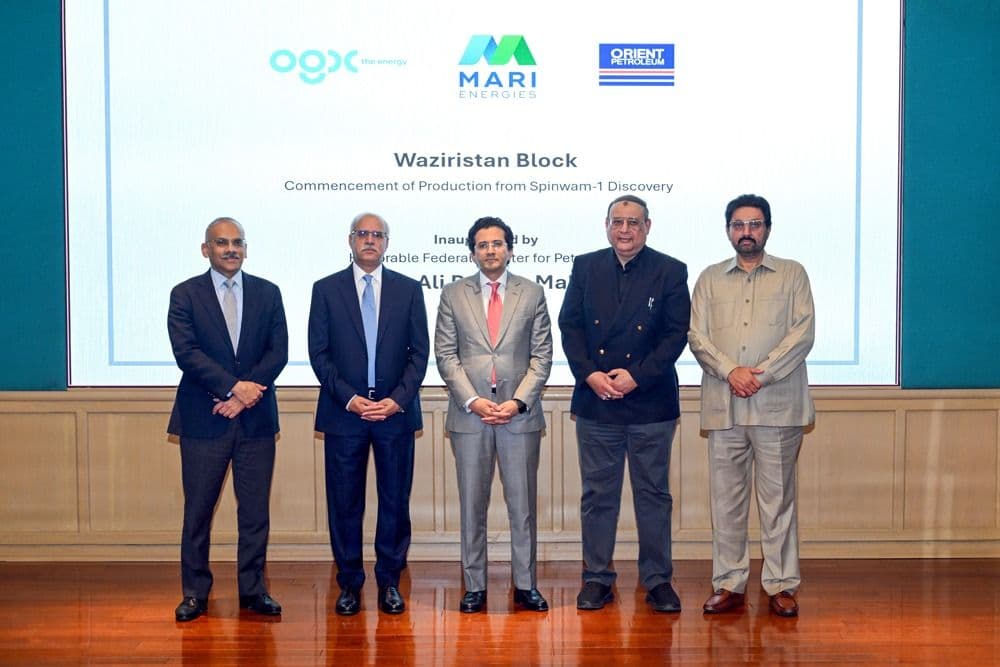
The inauguration ceremony was held at MariEnergies’ Head Office in Islamabad, with the field team joining virtually. The Hon’ble Federal Minister for Petroleum, Mr. Ali Pervaiz Malik, graced the occasion as the Chief Guest. In his remarks, he appreciated MariEnergies’ strong performance and contributions to the country’s energy sector. He also paid tribute to the ultimate sacrifices of the martyrs who laid down their lives during the journey of developing the Waziristan Block. We were also pleased to host the leadership of our JV partners and other key stakeholders. Spinwam-1 marks a significant milestone, with multiple gas and condensate discoveries across key formations, demonstrating strong production potential. Initial gas supply to SNGPL stands at approximately 40 MMSCFD, along with 200 BBL/day of condensate. This brings the total production from the Waziristan Block (Shewa and Spinwam) to around 100 MMSCFD of gas and 800 BBL/day of condensate. This achievement underscores MariEnergies’ commitment to unlocking indigenous resources, strengthening energy security, and reducing reliance on imports. A step forward in powering Pakistan’s future.
Apr 3, 2026
Oil and Gas Development Company Limited (OGDCL) announced on Wednesday the commencement of gas and condensate production from Spinwam-1 discovery located in Waziristan Block in Khyber Pakhtunkhwa under the Extended Well Testing (EWT) phase. The inauguration ceremony, held at the Mari Energies Head Office, was graced by Federal Minister for Petroleum, Mr. Ali Pervaiz Malik. Managing Director & CEO of Mari Energies Faheem Haider also attended the ceremony. Meanwhile, OGDCL, one of the country’s largest E&P companies, disclosed via a notice to the Pakistan Stock Exchange (PSX) that the well was completed in Lockhart reservoir. It said that the current gas production rate from the well was ~40 MMscfd, and ~ 200 BBL/D of condensate. It added that with the induction of this gas, the early production facilities established at Shewa will be operated at full capacity, with total production from both Shewa and Spinwam wells will be around 100 MMscfd gas and ~800 BBL/D of condensate. READ MORE: OGDCL makes significant oil and gas discovery in Khyber Pakhtunkhwa “The joint venture comprises Oil & Gas Development Company Limited (35% working interest), Mari Energies Limited (the Operator of Waziristan Block) (55%), and Orient Petroleum Inc. (10%) working interest, respectively,” the bourse was informed. Last month, OGDCL discovered further oil and gas reserves at its Baragzai X-01 (Slant) exploratory well in Kohat, Khyber Pakhtunkhwa.
Apr 1, 2026