
News & Events / Latest News
ISLAMABAD: The upstream oil and gas exploration and production companies have lodged a strong protest against the state-owned Sui Southern Gas Company Ltd and Sui Northern Gas Pipeline Ltd for defaulting on more than Rs1.5 trillion in overdue payments. Pakistan Petroleum Exploration and Production Companies Association (PPEPCA), in a letter to the Petroleum Division, said that more than Rs1.5tr was pending against SNGPL and SSGC. The dues of exploration companies stood at Rs224 billion in June 2015, which piled up to Rs1.5tr by September 2025, excluding late payment surcharges. “It is deeply concerning that no material improvement has been observed in the outstanding receivables during the fiscal year 2024-25, despite four consecutive consumer gas price increases notified on Nov 1, 2023, Feb 1, 2024, July 1, 2024, and Jan 1, 2025,” PPEPCA has said. SNGPL owes Rs718bn and SSGCL Rs730bn up to September 2025 The association said that in recent times, this sector has been producing 2.68 billion cubic feet daily (BCFD), meeting over 30 per cent of the country’s primary energy needs. However, the sector is witnessing a downward trend, driven primarily by the persistent defaults of state-owned gas utility companies in settling overdue payments to E&P companies. This deterioration not only threatens energy security but also undermines investor confidence, further weakening the overall investment climate in the country, it said. The letter added that, as a result, the country’s gas production has declined significantly from its peak of 4 BCF per day. PPEPCA said that SNGPL was to pay Rs718bn, whereas SSGCL was to pay Rs730bn to oil and gas exploration companies. It added that the balance provided does not reflect the total receivables of upstream companies, as some companies have not provided the required data. The E&P companies affected by the huge overdue debt include Al Haj, GHPL, Kufpec, Mari, OGDCL, OPI, POGC, POL, PPL, Prime and UEP. It added that the receivables have accumulated over 10 years, and PPEPCA also expressed concerns that several E&P companies exited Pakistan during this period. PPEPCA has referred to the terms and conditions in Petroleum Concession Agreements and Gas Sale Agreements, clearly stating that gas buyers must make payment within 30 days of receiving the invoice. The critical cash flow crisis has led to the scaling back of exploration and development activities, resulting in a continuous decline in indigenous gas supplies. Published in Dawn, January 18th, 2026
Mar 3, 2026ISLAMABAD: The Oil Companies Advisory Council (OCAC) has expressed serious concern over failure of the regulator to implement the government's decision to raise margins of oil companies and over call for full recovery of investment in digitisation. In a letter to the Oil and Gas Regulatory Authority (Ogra) chairman, OCAC pointed to the absence of a notification for 50% increase in margins of oil marketing companies (OMCs), approved by the Economic Coordination Committee (ECC), for motor spirit (MS) and high-speed diesel (HSD). "As per our understanding, Rs0.61 per litre (out of a total of Rs1.22) was intended to take effect from December 15, 2025, with the remaining 50% linked to the achievement of digitisation targets." During the above-stated meeting held on January 14, 2026, the industry was informed that the federal cabinet had advised linkage of the entire increase in margins with 100% digitisation. "While the industry remains fully committed to digitisation, this revised linkage has effectively deferred implementation of even the already-approved immediate increase, thereby placing an additional financial strain on OMCs," it said. "OMCs continue to operate under a regulated margin framework that has remained stagnant for over two years and does not reflect escalating costs related to operations, financing, compliance and mandatory digitisation initiatives." OCAC requested Ogra to plead the industry's case, in coordination with the Ministry of Energy (Petroleum Division), before the cabinet for immediate notification and incorporation of 50% of the approved increase in margin, with effect from December 15, 2025. Digitisation cost recovery OCAC recalled that it had already shared the digitisation cost recovery mechanism through a letter dated January 12, 2026. To ensure timely, transparent and equitable recovery of digitisation investments, "it is proposed that a dedicated escrow-type account titled "Digitisation Fund" be created in the MS and HSD price structure, similar to the existing statutory levies (petroleum levy and climate support levy). The proposed mechanism provides for milestone-based reimbursements, ensuring funds are released against verified implementation, including due compensation of the significant investments already made by the OMCs in digitisation, it said. Under the mechanism, OCAC added that the combined margin of Rs2.56 per litre for the OMCs and dealers was proposed to be included in the price structure as a separate line item, split equally between MS and HSD, ie, Rs1.28 per litre. It asked Ogra and the Petroleum Division to obtain approval of the ECC for the inclusion of that separate line item and exercise joint oversight over the operation of the fund. It suggested that the account may be maintained as a savings account, with returns further supporting the digitisation initiatives. The oil industry body also called for immediate reimbursement, within 15 days of the establishment of the mechanism, covering both capital and operational costs. It underlined the need for the recovery of investment in auto tank gauging (ATG) systems already installed at retail outlets and the contribution made by the OMCs to the Raahguzar App as well as the contributions made by the OMCs and refineries to the track and trace system. OCAC proposed setting an initial milestone for the installation of ATGs at 10 retail outlets per OMC, with reimbursement to be initiated within 15 days of the receipt and verification of requisite documentation. It suggested the continuation of the mechanism until 2030, in line with the digitisation timelines submitted by the OMCs and extension of the mechanism beyond completion for maintenance and future technological upgrades. In the event the above mechanism is not adopted, OCAC proposed structured and ring-fenced recovery through the inland freight equalisation margin (IFEM), by incorporating the approved per-litre digitisation cost into each OMC's notified cost structure. "In such a case, timely fortnightly recovery and reconciliation would need to be ensured by Ogra." The industry lobby emphasised early finalisation of the above matters, given their critical importance to the financial viability, regulatory compliance and uninterrupted supply operations of the OMCs.
Mar 3, 2026Ishaq Dar said this while chairing a meeting of the Inter-Ministerial Committee held here on Wednesday to review the existing pricing structure of the oil and gas sector. A statement issued by the office of the Deputy Prime Minister said that the committee discussed pricing framework under the applicable petroleum policy regime. Members examined current mechanisms and explored reform options aimed at improving affordability, sustainability, and sectoral performance. Attendees included Federal Ministers IPC, Power and Petroleum; SAPMs Tariq Bajwa and Bilal Kayani; Advisor Privatisation; NC SIFC; Head of Power Sector Task Force; and Chairman of the Federal Board of Revenue. Copyright Business Recorder, 2026
Mar 3, 2026ISLAMABAD: A planned $5 billion investment in Pakistan’s oil and gas exploration sector has fallen into uncertainty after the government extended off the grid levy to third party gas suppliers, a move industry stakeholders warn has effectively made private sector gas distribution commercially nonviable. The levy has now been imposed on third party companies supplying gas to industrial consumers, including the Universal Gas Distribution Company (UGDC), despite the fact that they procure gas at auctioned prices from exploration and production (E&P) companies. Confirming the development, UGDC Chief Executive Officer Ghiyas Abdullah Paracha said the company would now act merely as an agent for collecting the levy on gas supplied to industrial units, adding that the move would strip third party suppliers of their competitiveness in the gas market. He noted that details of the levy collection mechanism would be outlined in a Presidential Ordinance, which is yet to be promulgated. Earlier, under an agreement with the International Monetary Fund (IMF), the government imposed off the grid levy on Sui Northern Gas Pipelines Limited (SNGPL) and Sui Southern Gas Company (SSGC) for gas supplied to captive power plants. The gas price for captive users was initially increased to Rs3,500 per MMBtu, followed by a 5 percent levy from February 2025. Under the IMF backed framework, the levy was increased to 10 percent from July 2025 and is scheduled to rise to 15 percent from February 2026, before escalating further to 20 percent from August 2026. As a result, the effective gas price for captive power plants has surged to $15.36 per MMBtu, including a levy of approximately Rs650 per MMBtu. The sharp increase has severely affected the export oriented industrial sector. Gas consumption by exporters in Punjab has declined dramatically to 25 mmcfd from 180 mmcfd, while in Sindh it has dropped to 90 mmcfd from 210 mmcfd. Industry sources say more than 100 industrial units have shut down due to high gas prices and the unavailability of reliable grid electricity, contributing to a visible decline in national exports. Under the amended 2012 E&P Policy and third party access rules, E&P companies were allowed to sell 35 percent of their gas through competitive bidding to private distributors. Firms such as UGDC procured gas at auctioned prices—close to $8 per MMBtu—while paying windfall tax, royalty, transportation charges and over 100 percent Unaccounted for Gas (UFG) losses, operating on thin margins to supply industrial consumers. This framework helped E&P companies improve cash flows that had earlier deteriorated due to delayed payments by Sui Gas companies, contributing to a gas sector circular debt of Rs3.2 trillion. In return, E&P firms committed to investing $5 billion in oil and gas exploration and production across the country. However, industry stakeholders say the extension of off the grid levy to third party distributors has undermined the entire model. While Sui Gas companies procure gas at an average price of around $4 per MMBtu and pass on the levy to consumers with guaranteed margins, third party suppliers procure gas at significantly higher auctioned prices and now face the levy without any viable profit margin. According to a letter issued by the Petroleum Division on Jan 13, 2026, UGDC has been formally designated as an agent for levy collection. A notification issued on Jan 9, 2026, under Section 9 of Off the Grid (Captive Power Plants) Levy Act 2025, added UGDC to the schedule of authorised levy collecting entities. Industry sources warn that the policy shift has effectively scuttled the amended 2012 E&P Policy, jeopardising future upstream investment and discouraging private participation in gas distribution at a time when domestic energy production is already under strain. Adding to concerns over policy consistency, sources pointed out that certain fertilizer sector players continue to receive gas for captive power plants without being subjected to off the grid levy, raising questions about selective enforcement and sectoral discrimination. Stakeholders caution that unless corrective measures are taken urgently, Pakistan risks losing critical upstream investment, further deepening its energy crisis and undermining export competitiveness.
Mar 3, 2026ISLAMABAD: After finalising the annual LNG delivery plan for 2026 with Qatar and ENI, the Power Division has informed the Petroleum Division that the power sector will be unable to utilise an additional nine LNG cargoes worth about $270 million. This development has once again placed the Petroleum Division in a difficult position, as it may be left with no option but to divert these surplus cargoes to the domestic gas sector, potentially aggravating the country’s already rising circular debt. Pakistan will import 89 LNG cargoes out of 124 in 2026 -- 88 from Qatar and 1 from ENI. “The electricity demand outlook for 2026 has been revised downward, mainly due to increased solarisation and a lower projected GDP growth rate,” a senior official at the Petroleum Division told The News. “Last week, the Power Division formally conveyed that it would not be able to consume nine more RLNG cargoes in 2026, despite the fact that the annual delivery plan has already been finalised with Qatar and ENI.” Under the agreed plan, 35 LNG cargoes, valued at over $1 billion, will be diverted to international market players. These diversions are expected to generate around Rs160 billion annually, which would help in retiring a portion of the gas circular debt. Of the 35 cargoes, 24 will be diverted by Qatar and 11 by ENI. Pakistan LNG Limited (PLL) has a 15-year agreement with ENI—an Italian LNG trading company—under which ENI supplies one LNG cargo per month at 12.14 per cent of Brent. Meanwhile, Pakistan’s gas circular debt has surged to Rs3,200 billion, largely due to a sharp increase in late payment surcharge, which alone stands at Rs1,450 billion, officials said. Of the remaining Rs1,750 billion, around Rs210 billion has accumulated due to income tax and GST, while the actual stock of circular debt is estimated at Rs1.5 trillion. Previous governments led by PML-N and PTI had signed two long-term LNG supply agreements—one for 15 years at 13.37 per cent of Brent and another for 10 years at 10.2 per cent of Brent—on a take-or-pay basis with sovereign guarantees. Significant investments were also made in privately managed RLNG terminals, RLNG pipelines, and four RLNG-based power plants in Punjab. However, the power sector is now increasingly reluctant to use RLNG for electricity generation, as RLNG-based power does not rank high on the economic merit order. Consequently, electricity produced from RLNG leads to an increase in the overall power tariff basket. The News International (January 12, 2026)
Mar 3, 2026ISLAMABAD: The Pakistan Petroleum Exploration and Production Companies Association (PPEPCA) has warned that it may seek international legal remedies if the government insists on imposing Super Tax at rates exceeding those stipulated in its members’ statutorily protected Petroleum Concession Agreements (PCAs). In a letter to the Secretary of the Special Investment Facilitation Council (SIFC) Jamil Ahmad Qureshi, PPEPCA Secretary General Ibrar Khan said that despite SIFC’s efforts to promote foreign direct investment (FDI) in Pakistan—particularly in the oil and gas sector—upstream exploration and production (E&P) companies are facing serious jeopardy due to the imposition of Super Tax under Sections 4B and 4C of the Income Tax Ordinance, 2001. He said the Super Tax not only undermines the financial viability of member companies but also weakens Pakistan’s decades-long commitment to attracting foreign investment in the oil and gas sector. Sharing details, the PPEPCA secretary general said that E&P companies had challenged the tax before the Islamabad High Court (Writ Petition No. 4027 of 2022). The court held that Super Tax could only be imposed to the extent that it did not exceed the tax cap prescribed in the Petroleum Concession Agreements. The court further ruled that Section 4C “will not apply to petroleum exploration companies to the extent its application results in taxation exceeding the thresholds stipulated in Rule 4 of the Fifth Schedule.” READ MORE: Super tax case: Rs114bn collected in terms of Sec 4B of IT Ord, FCC told The High Court took into account the critical importance of the sector to the national economy and noted that under Section 3B of the Regulation of Mines and Oil-Fields and Mineral Development (Government Control) Act, 1948, E&P companies were granted a statutory guarantee that tax rates would remain frozen and capped as of the date on which the PCA is executed with the President of Pakistan. The court also recognised that the 1948 Act expressly provides that tax rules applicable at the time of signing a PCA cannot be altered subsequently, and that any later amendments to the Income Tax Ordinance inconsistent with PCA terms would not apply to the concessionaire. According to PPEPCA, the decision was not challenged by the Federation but only by a Commissioner of Inland Revenue through an intra-court appeal in the Islamabad High Court. In an unusual situation, the commissioner is the appellant, while the Federation and the Federal Board of Revenue (FBR) are respondents. These appeals were subsequently taken up—initially by the Constitutional Bench of the Supreme Court—and are now pending before the Federal Constitutional Court. “At this stage, we do not know the outcome of the case. However, we wish to draw SIFC’s attention to the fact that all PCAs contain dispute resolution clauses providing for international arbitration,” PPEPCA said, recalled that in the Reko Diq case, in which Pakistan was ordered to pay USD5.84 billion plus interest, and the Karkey case, where penalties of USD220 million were paid. Both cases, it added, resulted from violations of legal protections and contractual commitments. The association cautioned that if the Federation insists on imposing Super Tax beyond PCA limits, some member companies may invoke these dispute resolution clauses. The potential liability could run into billions of dollars, further straining Pakistan’s already fragile fiscal position, damaging its sovereign credit rating, discouraging future FDI, and undermining its reputation in international capital markets. PPEPCA further stated that Pakistan has taken decisions at the highest level to encourage multinational and foreign companies to develop the country’s oil and mineral resources, a policy with important security implications as well. Any perception that government commitments—backed by statute—can be violated would have a devastating impact on these carefully structured plans. “No international or even local investor will commit billions of dollars to high-risk, long-term upstream projects if foundational fiscal terms can be unilaterally altered,” said Ibrar Khan. “Investors accepted these risks only because of the fiscal stability guaranteed by PCAs. Removing this certainty retrospectively is fundamentally unfair and economically untenable.” He added that SIFC’s mandate to streamline investment facilitation places it in a unique position to help resolve the issue. “Every day this matter remains unaddressed damages the country’s standing and increases the risk of international arbitration. We; therefore request SIFC’s intervention to ensure the government honours its legally binding contractual obligations.” Copyright Business Recorder, 2026
Mar 3, 2026In his place, the government gave the additional charge of petroleum secretary to Mirza Nasir-ud-Din Ahmad, Additional Secretary Petroleum, on a look-after basis till the posting of a regular officer. Informed sources said Mr Agha and petroleum minister Ali Pervez Malik were not on the same page over the past couple of months, despite both being close to the top PML-N leadership, on issues pertaining to gas allocations, third party use of pipeline capacity by private sector, nominations for board of directors in public sector entities and matters relating to appointments in Oil and Gas Regulatory Authority (Ogra) including the position of its chairman. This led to the unceremonious exit of Mr Agha, a grade-22 officer of the Pakistan Administrative Service, formerly of the District Management Group. A similar situation had occurred earlier last year, culminating in the transfer of former petroleum minister Dr Musadik Malik to the Climate Change Division. Meanwhile, the government also appointed Muhammad Khalid Rehman as managing director of Pakistan Petroleum Ltd (PPL) for an interim period of three months in addition to his own position as Chief Financial Officer. He replaced Sikandar Ali Memon, who had been holding the PPL top post on an interim basis for quite some time but was not allowed to continue after reaching superannuation. More changes are likely to follow in the associated wings and companies of the petroleum division as a group of bureaucrats close to the minister appeared jubilant on the exit of Mr Agha and ready to assume rewarding board positions in lucrative petroleum companies. Published in Dawn, January 10th, 2026
Mar 3, 2026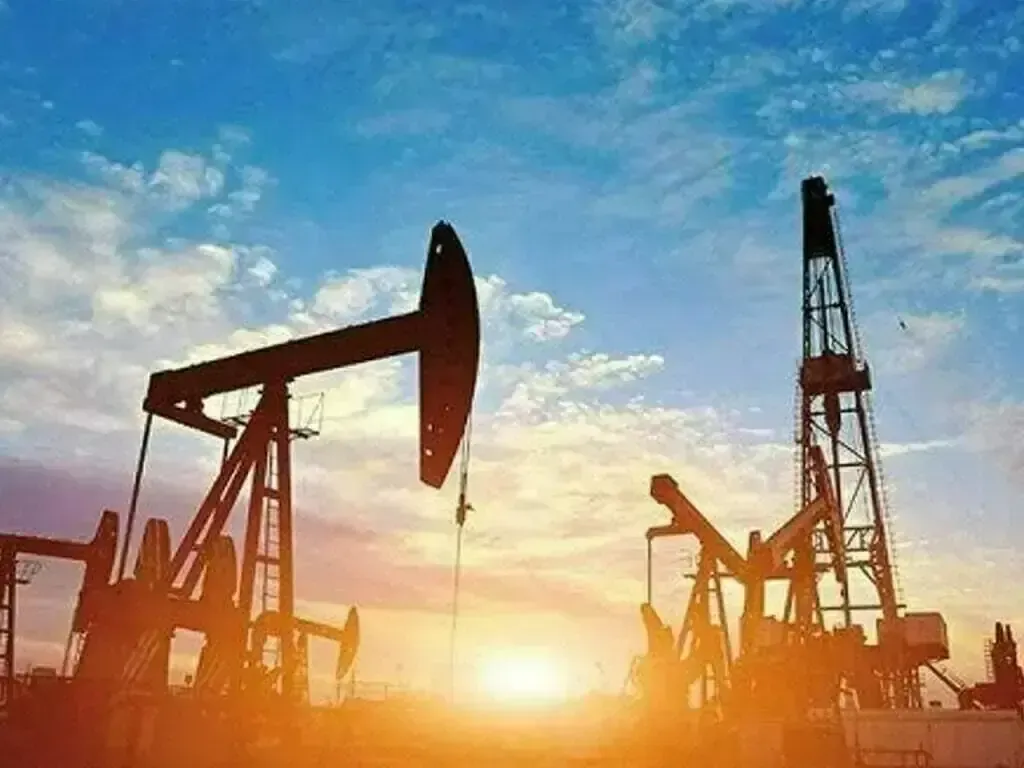
ISLAMABAD: The Petroleum Division Thursday signed Petroleum Concession Agreements (PCAs) and Exploration Licences (ELs) awarding 11 onshore blocks marking a significant step forward in advancing oil and gas exploration activities across the country. The signing ceremony was held in Islamabad, and was graced by the Federal Minister for Petroleum Ali Pervaiz Malik. The awarded blocks include eight in Balochistan, two in Sindh and one in Punjab. The successful joint venture partners include Oil and Gas Development Company Limited (OGDCL), Pakistan Petroleum Limited (PPL), Mari Energies Limited (Mari Energies), Pakistan Oilfields Limited (POL) and Prime Global Energies (Prime). READ MORE: Exploration licences: PD receives bids for 23 of 40 offshore blocks Speaking at the ceremony, the Federal Minister for Petroleum termed the signing a significant milestone in the Government’s efforts to boost domestic exploration, attract investment, and reduce reliance on imported energy. Signing of agreements demonstrate strong investor confidence in Pakistan’s upstream potential. The Minister expressed confidence that recent discoveries would lead to further investments in development and production, create employment opportunities, stimulate economic activity in the regions and will contribute meaningfully to reducing reliance on imported energy. He reaffirmed the Government’s commitment to facilitate exploration activities ensuring a stable investor-friendly environment for promoting the sustainable development of Pakistan’s indigenous energy resources. Mari Energies will serve as operator for six blocks. The company has secured 100 percent working interest in five blocks: Padag, Chagai, Dalbandin, Merui, and Merui West and will lead the Ahmad Wal block as operator with a 60% working interest, alongside OGDCL holding 40 percent. The OGDCL will operate three blocks, including Kalat North with 100 percent working interest. It will also lead two joint venture blocks: Naing Sharif (OGDCL 70 percent as operator, Prime 30 percent) and Khiu-II (OGDCL 60 percent as operator, Mari Energies 40 percent). The PPL emerged as the highest bidder for the Kalat South block and will operate it with a 40 percent working interest, in partnership with OGDCL (30) and Mari Energies (30 percent).
Mar 3, 2026